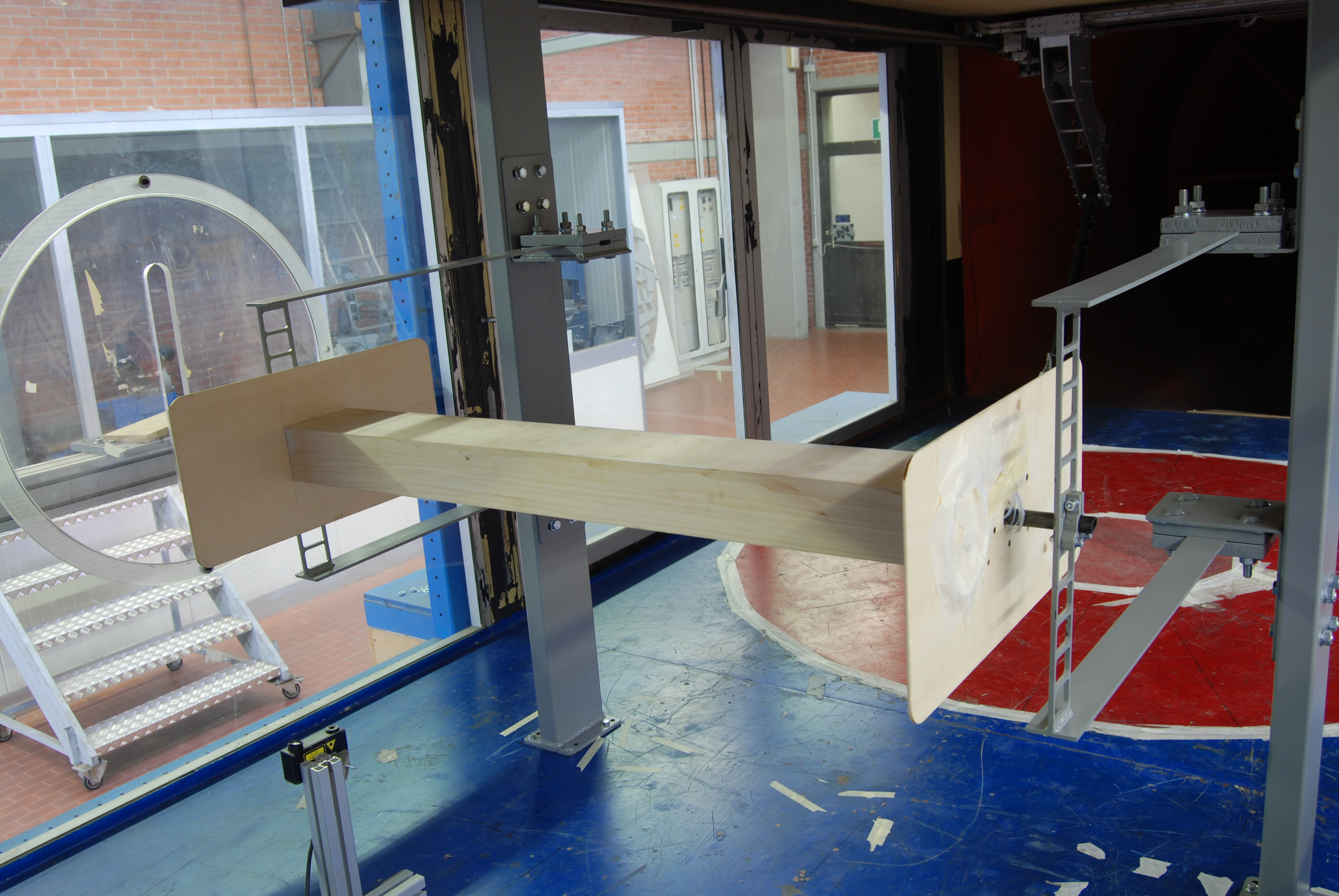
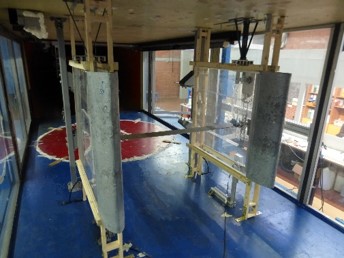
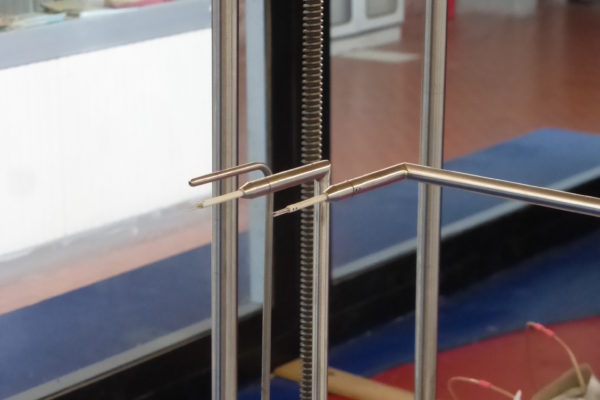
Displacements on dynamic rigs, such as elastically restrained bridge deck sectional models or flexible structural components, are measured using high-precision laser displacement sensors. At CRIACIV, this activity is carried out employing Micro-Epsilon laser distance sensors, specifically two optoNCDT-1700/200 units and one optoNCDT-1900/200 unit. Laser displacement measurement provides a direct, non-contact evaluation of structural motion along the measurement axis, ensuring high accuracy and avoiding any mass loading effects on the tested model. This approach is particularly effective when the geometry allows a fixed reference frame and an unobstructed optical path between the sensor and the target.
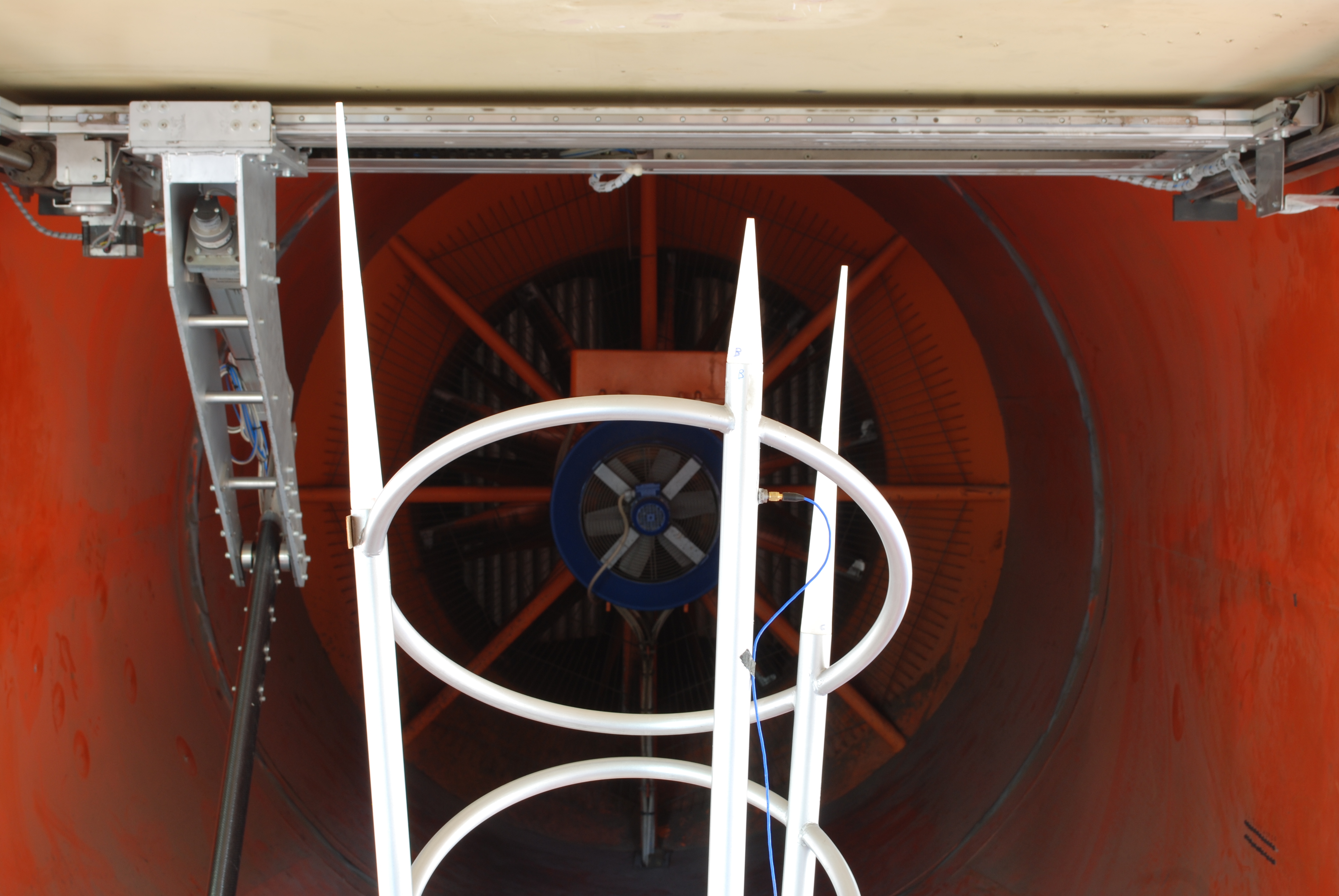
Accelerations are measured using a dedicated system equipped with three miniaturized PCB Piezotronics uniaxial accelerometers (Model 352C42). Thanks to their very low mass, these sensors can be installed directly on the model without significantly altering its dynamic properties, provided that cable routing is carefully designed to avoid any influence on the participating mass. Accelerometric measurements offer a complementary and, in many cases, essential source of information: they provide direct access to dynamic accelerations and, through time integration, allow the reconstruction of velocity and displacement histories.
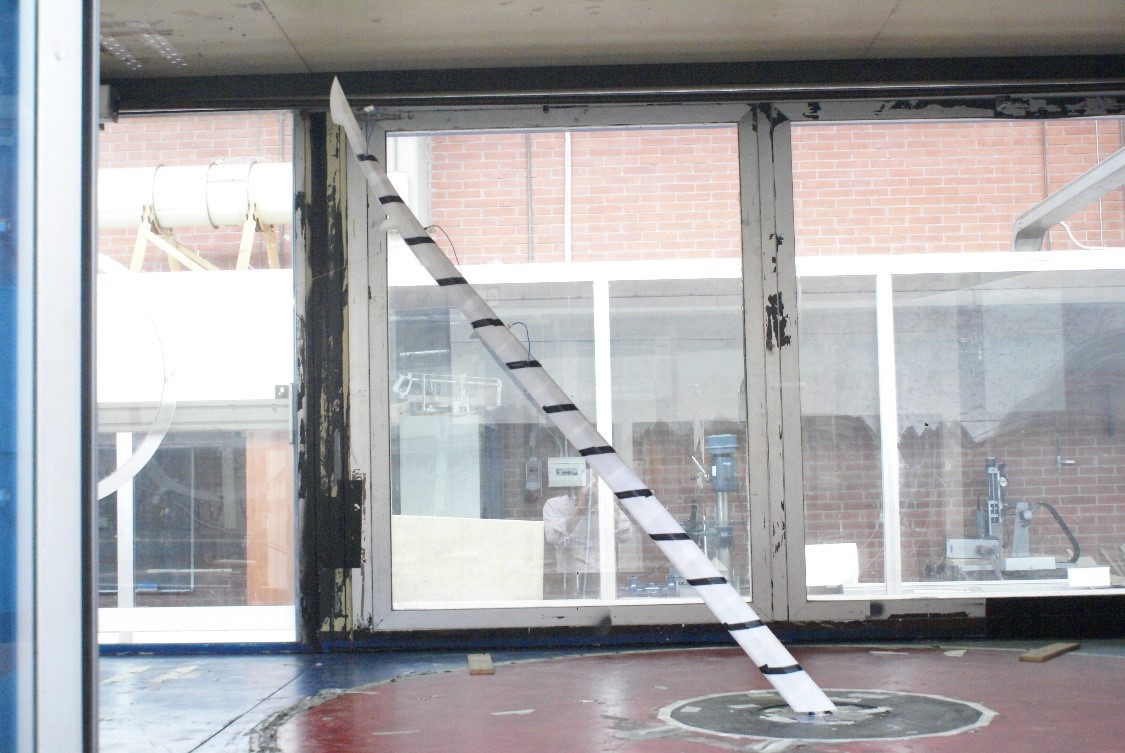
The combined use of laser displacement sensors and accelerometers enables cross-validation of measured responses, increasing the reliability of the experimental results. Moreover, accelerometers allow the investigation of portions of a structure or entire systems that cannot be directly monitored by fixed laser devices, for instance in the presence of large motions, complex geometries, or multiple degrees of freedom. This integrated measurement strategy ensures a comprehensive characterization of structural dynamics in wind tunnel experiments.
As often happens, study cases commissioned by private enterprises also stimulate research-oriented activities, raising technical challenges that must be addressed through a solid scientific approach and reference to the literature. This continuous interaction between professional practice and academic research represents a distinctive added value of CRIACIV with respect to standard private consulting in the field of wind engineering.